
Four centers across Massachusetts
Rockland Recovery Treatment Centers in Massachusetts
Addiction and mental health care from licensed clinicians, on the South Shore and in Middlesex County. Admissions answers day and night, and we check your insurance while you are still on the phone.
Confidential. No cost to call, and no obligation to start anything.

Accredited Facilities
- Joint Commission accredited facilities
- Admissions open 24/7
- Most insurance accepted
- Confidential from the first call
Our treatment centers
Four locations across Massachusetts. Which one you attend depends on the care you need and where you are coming from.
-
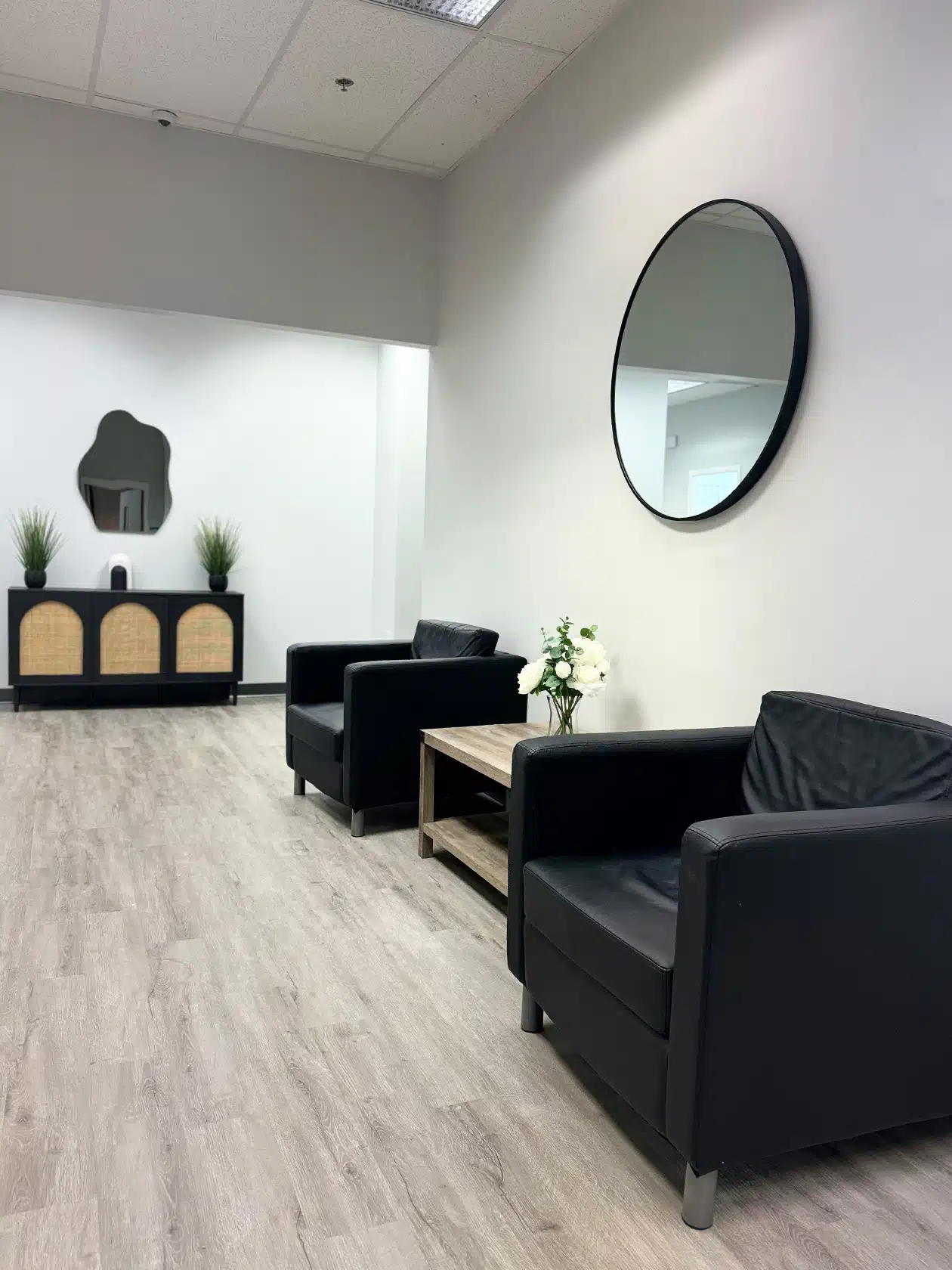
Massachusetts Center for Addiction
Addiction and mental health care on site
1515 Hancock St, Ste 300
Quincy, MA 02169
(844) 486-0671Open 24 hours, every day
-
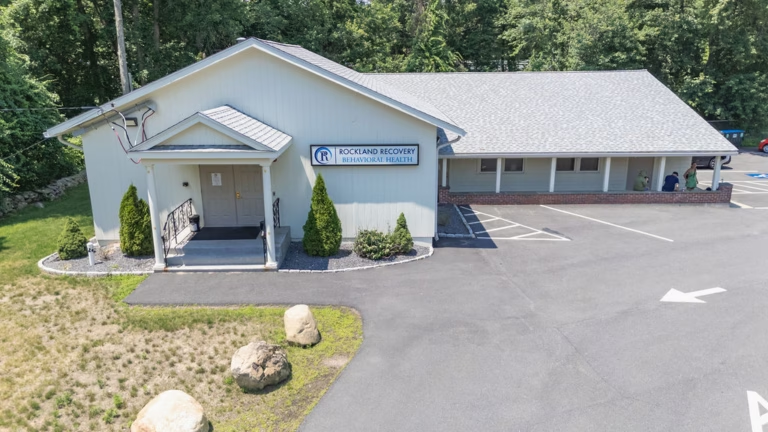
Rockland Recovery Behavioral Health
Mental health care on site
374 Old Post Rd
Sharon, MA 02067
(855) 520-0531Open 24 hours, every day
-
Rockland Recovery Treatment Center
Addiction treatment on site
400a Franklin St
Braintree, MA 02184
(855) 732-4842Open 24 hours, every day
-
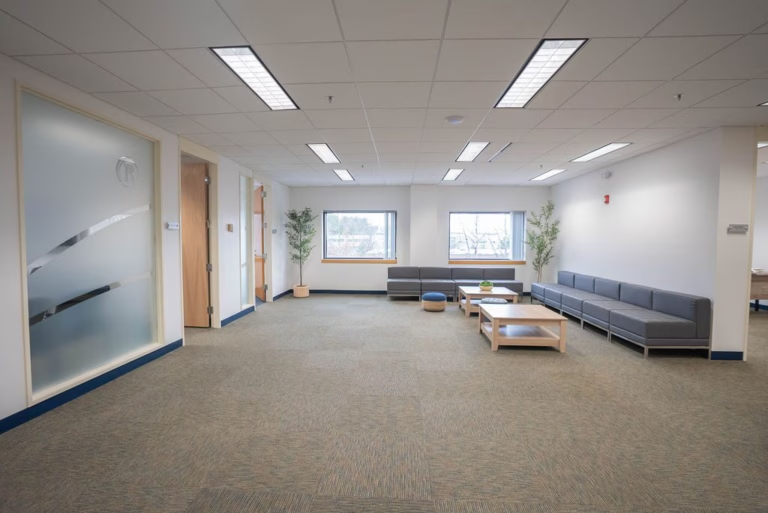
Rockland Recovery Behavioral Health North
Mental health care on site
209 Burlington Rd, #203
Bedford, MA 01730
(781) 217-6375Open 24 hours, every day

How to get into treatment
Most people expect this to be harder than it is. There is no referral to chase and no waiting list to join before anyone will speak to you.
-
You call
An admissions specialist asks what has been happening, how long, what you have already tried, and whether you are safe right now. About fifteen minutes.
-
We check your coverage
Insurance is verified while you are still on the line, so you leave the call knowing what it costs rather than waiting days for a number.
-
We tell you plainly
Either treatment is the next step, or a different level of care fits better, or we are not the right service and we say so and point you elsewhere.
-
You decide
Nothing about the call commits you to anything. Where it is the right step, admission can often happen the same day.
What we treat
Two things, and often both at once. Around half the people who come to us for a substance problem are also living with a mental health condition, so assessment covers both from the start.
- Substance use Alcohol, opioids, stimulants, benzodiazepines, and the combinations people usually arrive with. Medication assisted treatment where the evidence supports it.
- Mental health Depression, anxiety, bipolar disorder, post traumatic stress, borderline personality disorder, panic disorder and schizoaffective disorder.
- Both together Treating one and leaving the other tends not to hold. Dual diagnosis care addresses them as one picture rather than two referrals.
What the record looks like
- 573 Google reviews across our four centers
- 4.9 Average rating at our Braintree center
- 24/7 Admissions, every day of the year
- 2019 Treating people in Massachusetts since
What happens when you arrive
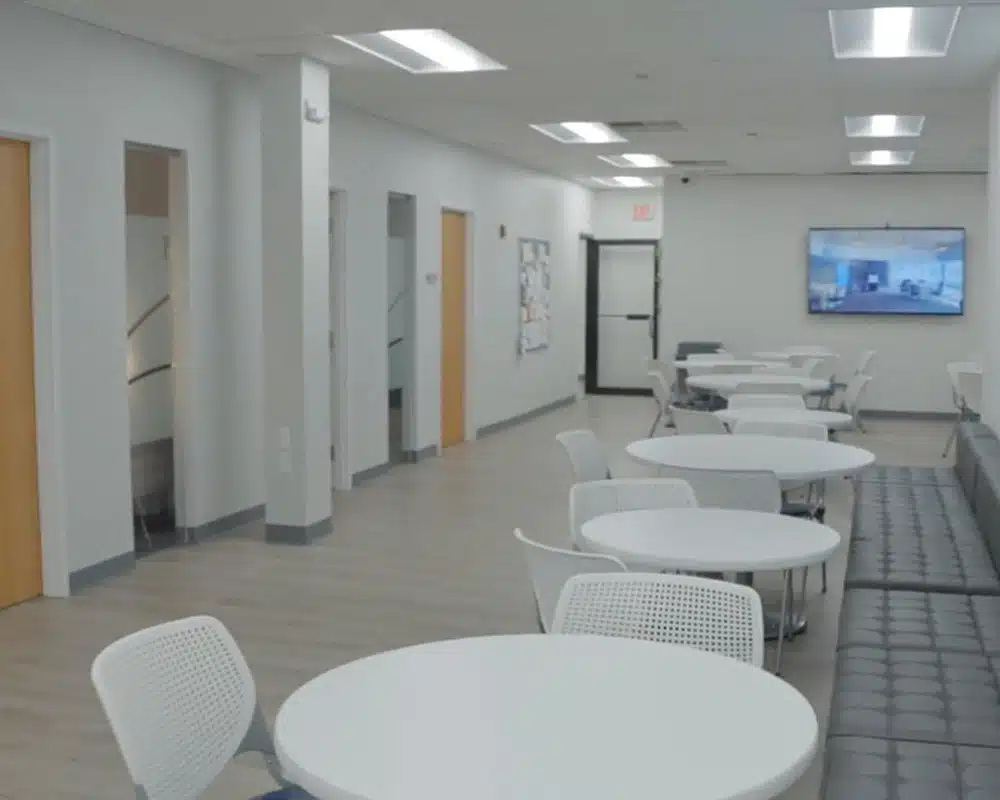
The first day is an assessment, and it is a proper one. A clinician sits with you and works through medical history, substance use, mental health, and what your life looks like outside treatment. Work, housing, family, the things that will still be there afterwards.
That takes a while, and the time is the point. The plan you leave with is built from that conversation, so the more it covers, the better it fits you.
If detox is needed you start there, under medical supervision. If it is not, you go straight into a program. Either way somebody walks you through what your days will look like before the first one begins.
You can bring your phone. You can bring your own clothes.
Insurance we work with
Most major carriers cover treatment at some level, including the Massachusetts plans you would expect. What varies is how much, and for how long.
We check before you commit rather than after. If your coverage falls short of what you need clinically, we will tell you that up front instead of letting it surface halfway through a program.












Not seeing your plan? Call and we will check it while you are on the phone.
Worth reading before you call
Most people arrive here having already decided something is wrong. These are the five things they usually want settled first.
What people say
Reviews left on our Google profiles by former clients and their families.
-
I can’t say enough about the people over here and the lengths they went to help a family member of mine. It was really above and beyond. Adam G, Eddie P and Eddie M I can’t thank you guys enough. Good human beings.

-
Massachusetts Center for Addiction is top notch for getting sober. They really care about the clients and their well being. The group facilitators are very enlightening and compassionate. They helped save my life and shape my recovery.

-
Great staff, they have positive energy and love to help in any way and get it done. Especially Eddie he’s absolutely on point and goes above and beyond no matter what. Definitely recommend!




Who runs it
Care is delivered by licensed clinicians. These are the people responsible for it.
-
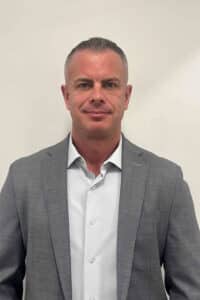 Edward McGrath
Founder and Chief Executive Officer
Edward McGrath
Founder and Chief Executive Officer
-
 Corey Gamberg, LADC II
Executive Director
Corey Gamberg, LADC II
Executive Director
-
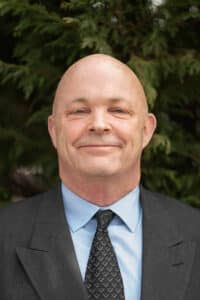 Bob Gallagher, LICSW
Clinical Director
Bob Gallagher, LICSW
Clinical Director
-
 Piers Kaniuka
Director of Program Development
Piers Kaniuka
Director of Program Development
-
 Alicia Lambert, LADC II
Primary Clinician
Alicia Lambert, LADC II
Primary Clinician
Common questions
Anything not covered here, ask on the phone. Admissions answers around the clock and there is no cost to call.
Call 888-299-4833Do I need a referral?
No. Call us directly. If you already work with a therapist or a doctor we are happy to coordinate with them, with your permission.
Can I start the same day?
Often, yes. Admissions runs twenty four hours a day and same day intake is possible where a place is available and it is clinically appropriate.
Can I leave once I have started?
Yes. Treatment here is voluntary and you can discharge yourself. We would rather talk first, because the urge to leave usually arrives at a predictable point and usually passes, but nobody is held.
Is what I tell you confidential?
Yes. Clinical information stays inside the treatment team and is protected by law. Nothing reaches an employer or a family member without your consent.
What if I am calling about somebody else?
That is a common reason people ring. We can talk through what treatment would look like, what your options are if they are not ready, and what tends to help rather than backfire.
Are your facilities accredited?
Yes. Our treatment facilities are accredited by The Joint Commission.
Levels of care
Which one fits is decided at assessment. Most people move between them as things change.
- Partial hospitalization A full clinical day, five days a week, sleeping at home.
- Intensive outpatient Several sessions a week. Fits around a job for most people.
- Outpatient treatment Regular therapy and check ins. The lightest level of care we offer.
- Sober living Structured housing for anyone whose home makes early recovery harder.
Arranged through partner facilities
We do not provide these ourselves. Where an assessment shows one is what you need, admissions arranges it with a partner facility and picks your care back up afterwards.
Talk to admissions
One call, any hour. It is free, it is confidential, and it commits you to nothing. Admissions will check your insurance while you are on the phone and tell you which of our four centers is the right fit.